Nukechan

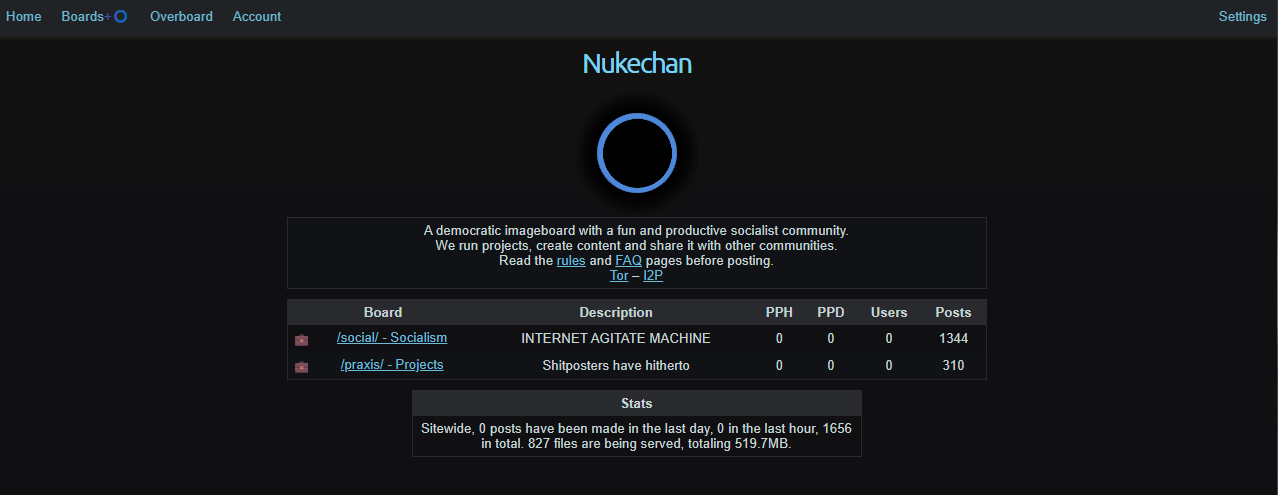
Nukechan (nukechan.net) is a small, specialized imageboard with a focus on nuclear energy, weaponry, and related "doomer" or geopolitical aesthetics. 1. Key Dates and Registration Domain Registration: The domain nukechan.net was registered on August 25, 2022. Launch: The site launched in late 2022. It appeared during a period of heightened global tension regarding nuclear conflict, catering to users who wanted to discuss these topics with the specific "chan" culture tone (a mix of serious analysis, dark humor, and aesthetic appreciation). 2. What is the site? Nukechan is an anonymous imageboard that serves as a niche hub for discussion on atomic energy and warfare. Content: Threads often cover technical discussions of nuclear reactors, historical footage of nuclear tests, geopolitical updates regarding nuclear powers, and "nuclear aesthetic" art (e.g., retro-futurism, fallout shelters). Culture: The site attracts a mix of military enthusiasts, physics hobbyists, and "collapseniks" (people preparing for or fascinated by societal collapse). It generally avoids the "shitposting" of larger boards in favor of more specific, on-topic image sharing. Software: It typically runs on Vichan or LynxChan, common choices for modern, small-scale imageboards. 3. What does the name mean? Nuke: Short for Nuclear weapon or Nuclear energy, the site's primary subject matter. Chan: The standard suffix for imageboards. Nukechan: Effectively translates to "The Nuclear Imageboard." Images from Jan 2026
Continue ReadingNukechan

Petrarchan

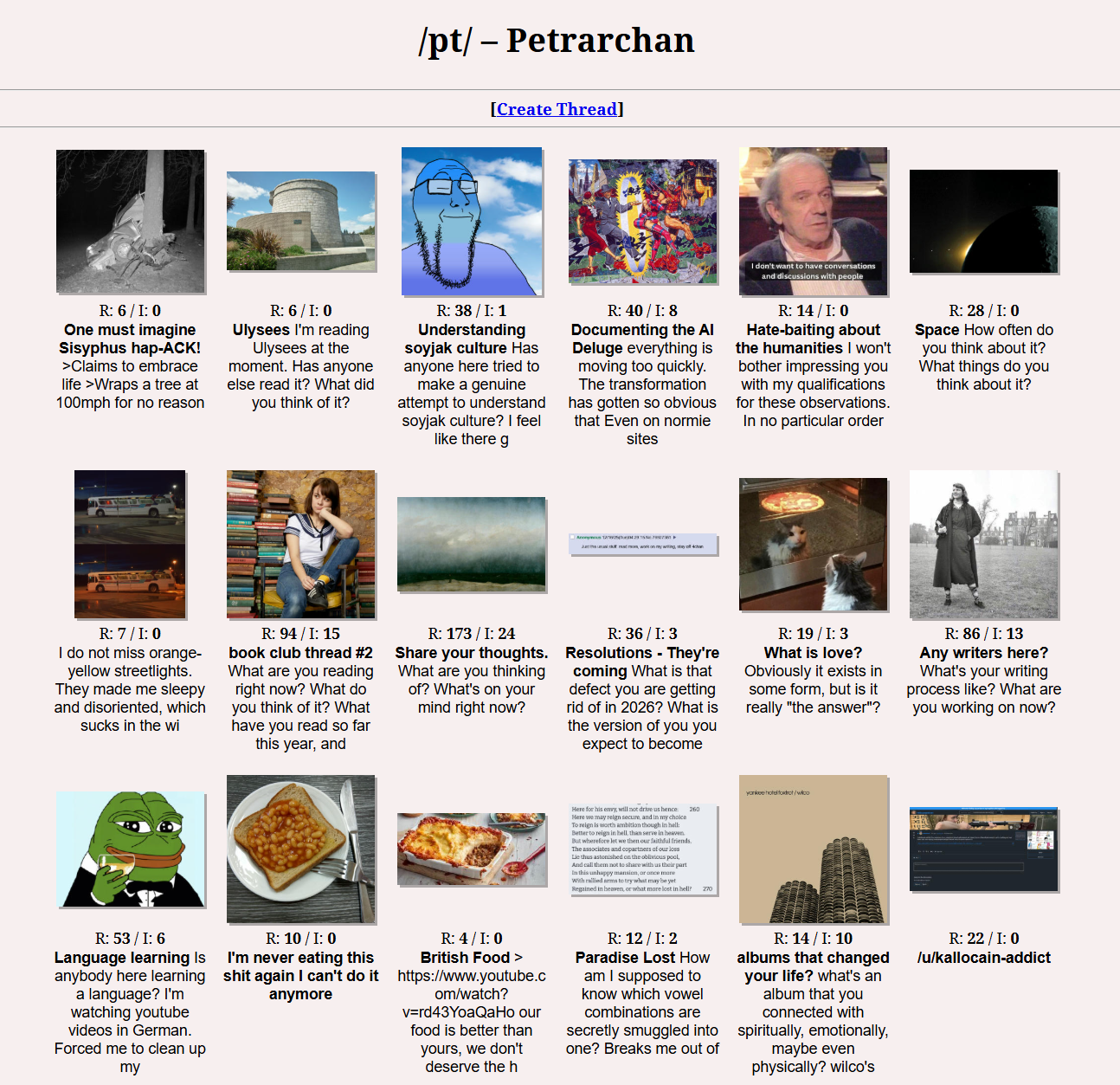
Petrarchan (petrarchan.com) is a niche, aesthetic-focused anonymous imageboard that belongs to the "Small Web" or "Boutique Chan" movement. It positions itself as a more cultured and "humanist" alternative to the more aggressive corners of the imageboard world. 1. Key Dates and Registration Domain Registration: The domain petrarchan.com was registered on August 25, 2021. First Wayback Machine Capture: The Internet Archive first captured a snapshot of the site on September 1, 2021. Launch: The site launched in late August 2021, appearing as part of a wave of specialized "Small Web" sites (alongside sites like yakui.moe and meth.cat) that sought to create small, high-quality, and "comfy" communities. 2. What is the site? Petrarchan is an anonymous imageboard (using the vichan engine) that emphasizes a "Romantic" and "Humanist" aesthetic. The Philosophy: The site draws heavy inspiration from the Renaissance and classical literature. It encourages "slow posting"—a contrast to the rapid-fire, low-quality content of larger boards. Users are encouraged to share art, literature, and personal reflections. Visual Style: True to its name, the site often uses classical art in its banners and has a very clean, minimalist CSS design. It is part of a loose webring of sites that prioritize site design and "webcore" aesthetics. Community: It is a small, insular community that avoids political drama and "raid culture," focusing instead on shared hobbies like reading, classic cinema, and music. 3. What does the name mean? The name is a tribute to the Italian poet and scholar Francesco Petrarca (Petrarch): Petrarch: Known as the "Father of Humanism," Petrarch was a central figure in the Italian Renaissance whose work emphasized human dignity, literature, and the beauty of the classical world. Chan: The standard suffix for imageboards. Petrarchan: Effectively translates to "The Humanist Imageboard." It signals to potential users that the site values artistic and intellectual pursuits over the "trash" aesthetic of other boards. 4. History and Context Petrarchan gained its small following by being part of the "nixx-sphere" or similar aesthetic collectives. It is often seen as the "sophisticated older sibling" to sites like trashchan.xyz. While traffic is low compared to mainstream sites, it is highly valued by its regulars for being a "literary lifeboat" where people can discuss the humanities without the cynicism found on 4chan's /lit/ board. images 1-2026

Continue ReadingPetrarchan

Plus4chan

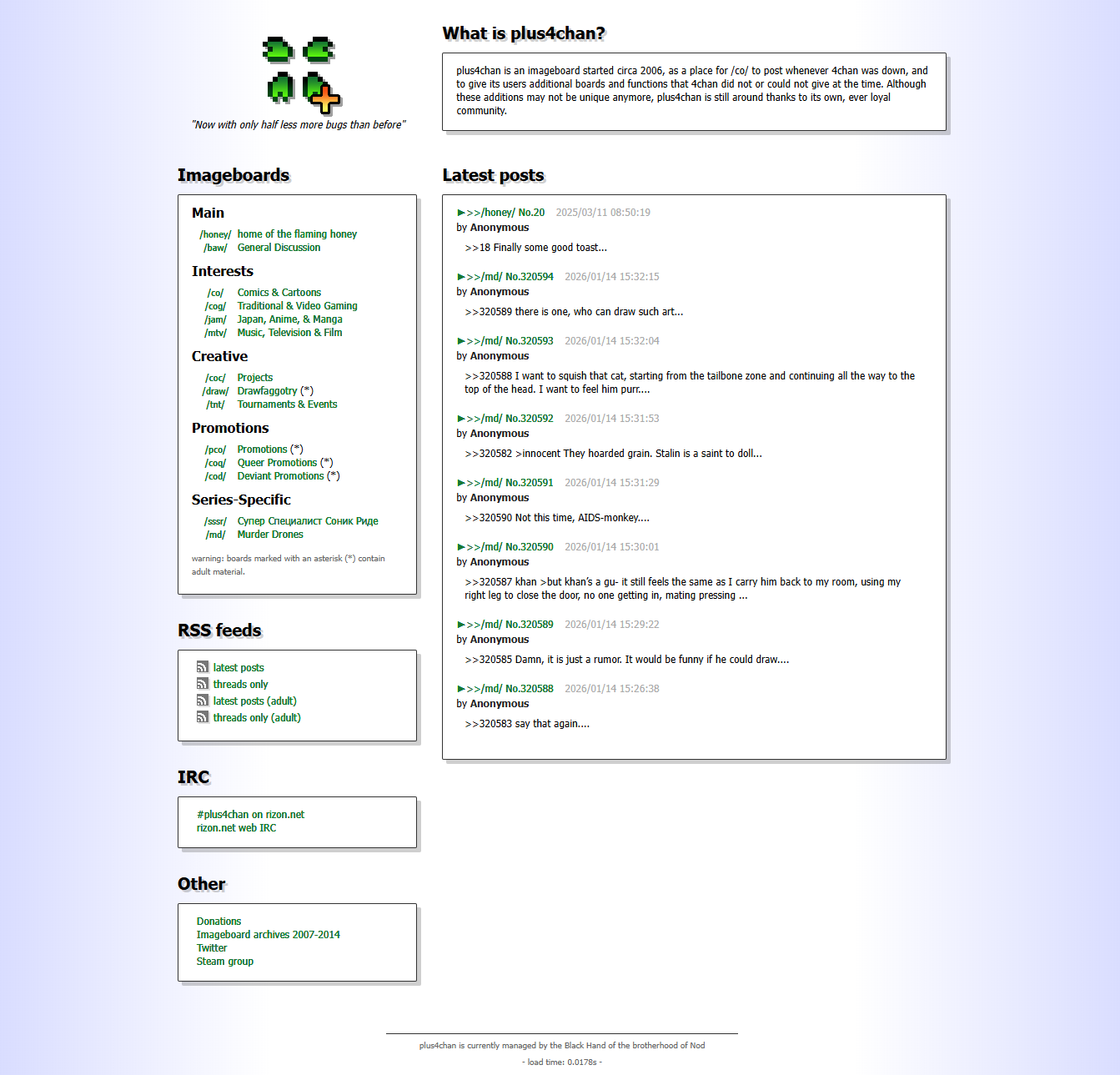
Plus4chan (plus4chan.org) is one of the oldest and most historically significant "alternative" imageboards. Founded in the mid-2000s, it was created as a direct response to the perceived decline in quality on 4chan, positioning itself as a more mature and better-moderated version of the "chan" format. 1. Key Dates and Registration Domain Registration: The domain plus4chan.org was registered on March 22, 2006. First Wayback Machine Capture: The Internet Archive first captured the site in late 2006. Launch: The site launched in early 2006. It is one of the few imageboards from that era that has remained continuously online for nearly two decades, outlasting almost all of its early competitors. 2. What is the site? Plus4chan is an anonymous imageboard that follows the traditional BBS structure but with a distinct cultural focus on "quality over quantity." The "Anti-4chan" Philosophy: In its early years, Plus4chan was famous for its "no-anime" stance (which has since softened or moved to specific boards) and its rejection of the "forced memes" and "randomness" that defined 4chan’s /b/ board. It sought to prove that the imageboard format could facilitate actual discussion rather than just shitposting. Custom Software: Unlike many modern boards that use LynxChan or Vichan, Plus4chan historically ran on its own modified software (often referred to as the "Plus4chan engine"), giving it a unique visual and functional feel compared to the standard "Yotsuba" clones. Community Vibe: The community is often described as "bitter but loyal." It caters to "oldfags" who grew tired of the mainstreaming of imageboard culture and wanted a smaller, more insular space. 3. What does the name mean? Plus: Signifies an addition, an improvement, or a "step up." It was intended to suggest that this was "4chan, but better" or "4chan with extra standards." 4chan: The name of the site it was parodying/improving upon. Plus4chan: Effectively translates to "The Improved Imageboard." 4. History and Context Plus4chan is a relic of the "Imageboard Wars" of the late 2000s. While it never reached the massive traffic of 4chan or 7chan, it maintained a highly influential user base. Many early internet researchers and "chan historians" used Plus4chan as a secondary hub for archiving internet culture. It is currently valued as a "Slow Web" project—a place where threads can stay active for weeks or months, a rarity in the fast-paced world of modern anonymous forums.

Continue ReadingPlus4chan

Smugloli

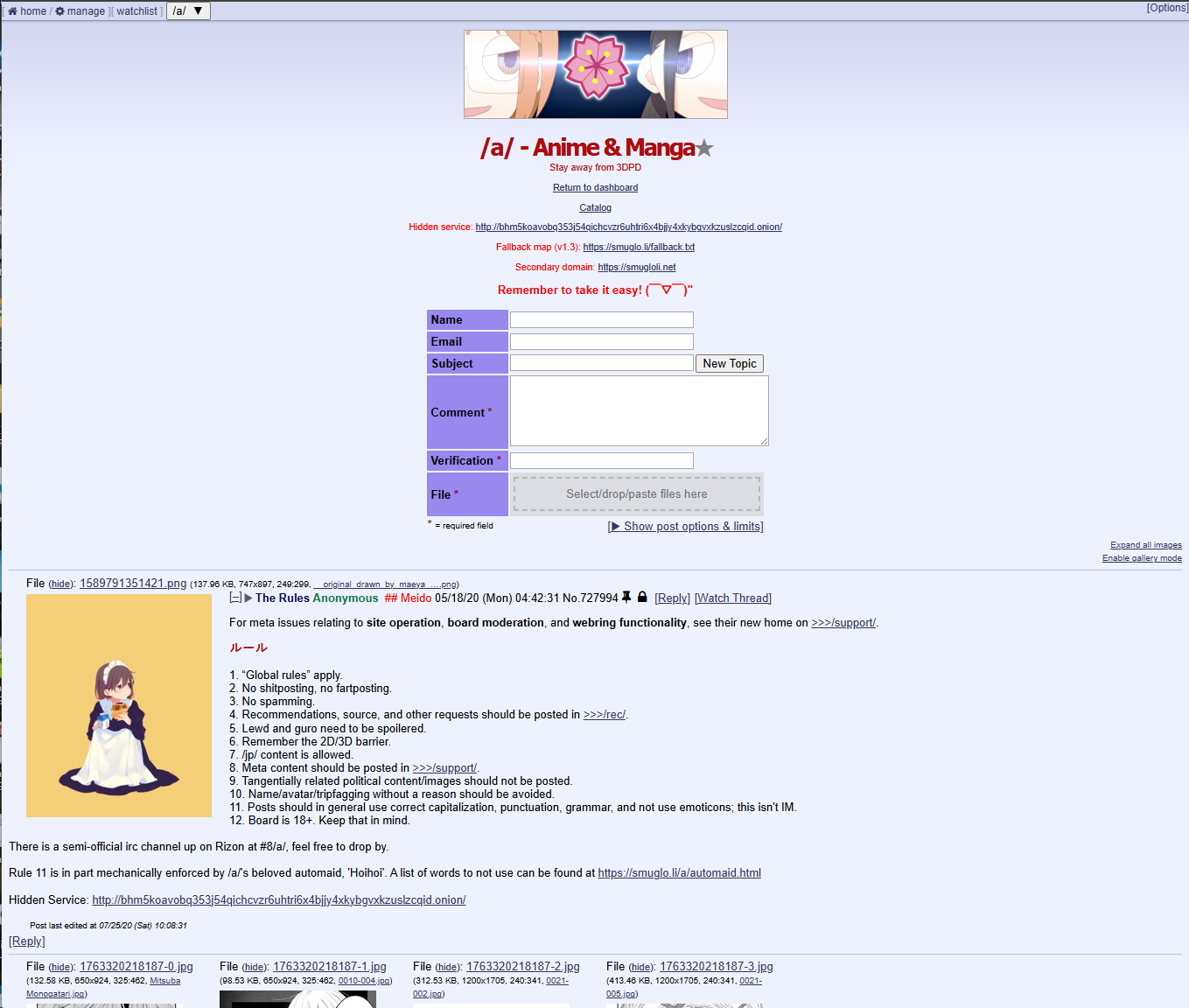
Smuglo.li (often stylized as SmugLo) is a niche internet project that gained notoriety in the mid-2010s as a "free speech" instance within the fediverse (specifically GNU Social and later Pleroma) while also hosting a dedicated imageboard component. 1. Key Dates and Registration Domain Registration: The domain smuglo.li was first registered on October 25, 2016. First Wayback Machine Capture: The Internet Archive first captured a snapshot of the site on January 4, 2017. Launch: The site launched in late 2016. It quickly became a focal point in the "Mastodon/Fediverse wars" of early 2017. Due to its extremely permissive moderation policies regarding "Red-tribe" (right-leaning) politics and controversial anime content, it was one of the first major instances to be "defederated" (blocked) by the larger, "safe-speech" Mastodon network. 2. What is the site? Smuglo.li was a hybrid social platform that combined a microblogging feed with a traditional imageboard. The Fediverse Instance: It began as a GNU Social instance, serving as a hub for users who were banned from or dissatisfied with mainstream Mastodon instances. It was known for a "troll-friendly" culture and a focus on absolute free speech. The Imageboard (/a/): The site hosted an imageboard (specifically at smuglo.li/a/) using the LynxChan engine. This board was primarily dedicated to anime discussion, but like many "alt-chans," it allowed for much more unrestricted discourse than boards like 4chan. Current Status: The site is largely considered a "legacy" instance today. By 2018–2019, it was often cited as a demo site for the catamphetamine/imageboard software and other open-source BBS projects, rather than a high-traffic community. 3. What does the name mean? The name is a portmanteau reflecting the site's primary aesthetic and technical origins: Smug: Refers to the "Smug Loli" internet meme—a specific anime character trope (often depicted as a young girl with a self-satisfied or mocking expression). This mascot was used extensively in the site's branding. Lo: Originally a reference to Local.li (a common GNU Social naming convention) or GNU Social (the "Lo" from the localized social feed). li: The country code top-level domain (ccTLD) for Liechtenstein, which was a popular choice for "free speech" sites in that era due to perceived jurisdictional benefits. Smuglo.li: Effectively translates to "The Smug Loli Channel/Instance."

Continue ReadingSmugloli

Soyzellig

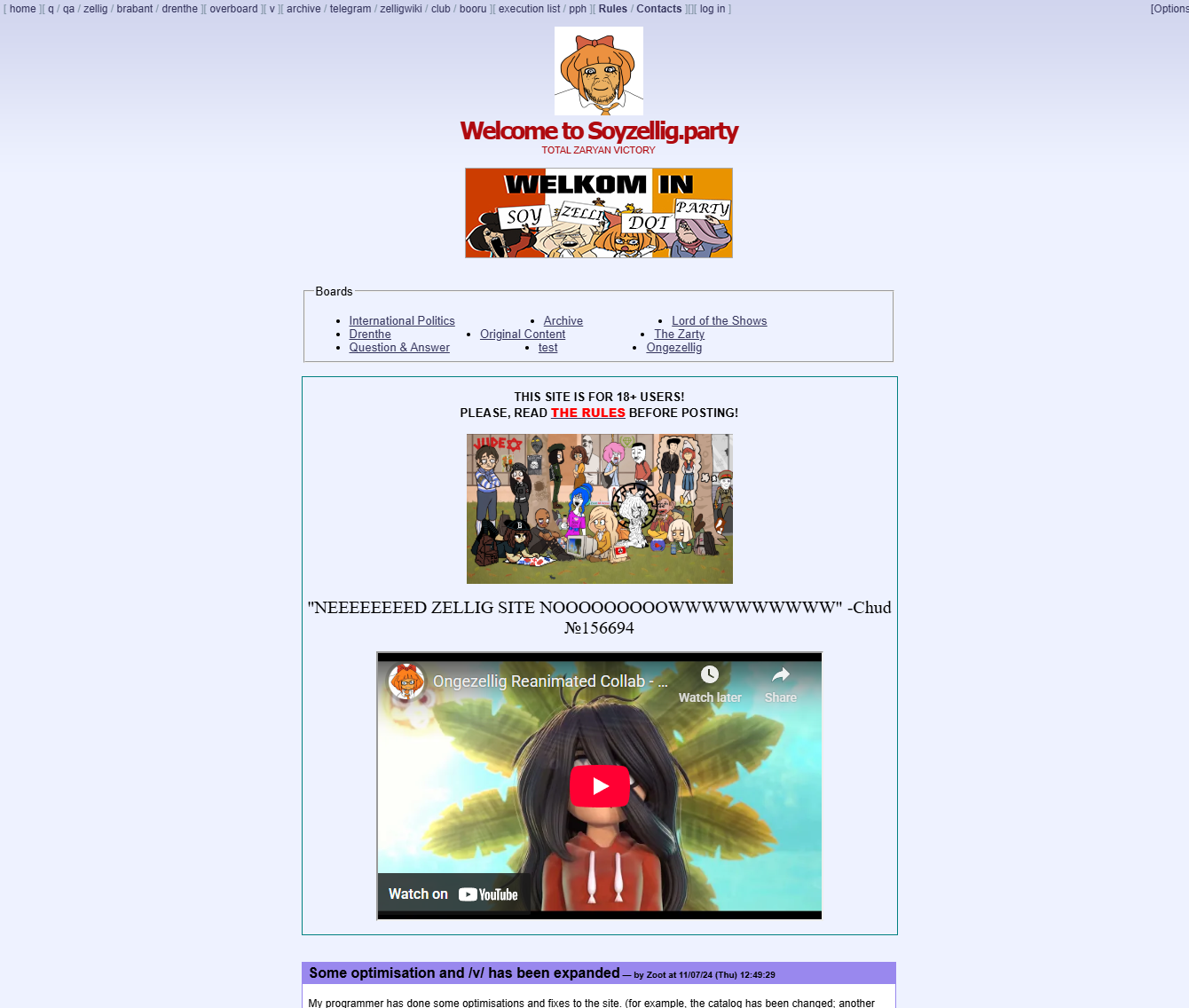
Soyzellig.party is a niche imageboard that exists at the intersection of the "Soyjak" internet subculture and the fandom for the Dutch animation series Ongezellig. It is a prominent "fork" or sister site of the larger soyjak.party (often called "The Sharty"). 1. Key Dates and Registration Domain Registration: The domain soyzellig.party was registered on August 14, 2023. First Wayback Machine Capture: The first archive of the site appeared on August 16, 2023, showing the site was functional almost immediately after the domain was secured. Launch: The site launched in mid-August 2023. It was created to provide a dedicated space for "Zellig" fans who were previously congregating on the main Soyjak.party boards but wanted a more specialized environment for their specific brand of memes. 2. What is the site? The site is a "Boutique Chan"—a small, specialized imageboard—dedicated primarily to Ongezellig, an independent Dutch animated web series created by Studio Mass. The Culture: The community uses the visual language of "Soyjaks" (stylized MS Paint-style illustrations) to depict characters from the show, particularly the three sisters: Maya (Mymy), Dorothy (Dottie), and Els. The Connection: While Ongezellig is a relatively wholesome (though melancholic) show about social anxiety and school life, it became an unlikely obsession within the Soyjak community. Users on this site create "Zellig-jaks" and engage in high-speed, anonymous shitposting, lore-building, and artistic "edits" of the show's frames. Aesthetic: The site uses the Vichan or LynxChan software framework, featuring a minimalist, old-school layout with a specific color palette (often orange or brown) that mirrors the show's school-uniform colors. 3. What does the name mean? The name is a triple-portmanteau of internet slang and the show's title: Soy: Short for Soyjak, the primary meme format used on the site. Zellig: Taken from the title of the show, Ongezellig. In Dutch, gezellig means "cozy," "sociable," or "convivial." Ongezellig means the opposite: "uncozy," "socially awkward," or "lonely." The "Zellig" shorthand is the common name for the fandom. Party: The standard suffix for sites in the "Soyjak" ecosystem (derived from the original soyjak.party). Soyzellig: Effectively translates to "The Soyjak-styled Ongezellig Party." 4. History and Community Context The site represents a "lifeboat" for a very specific sub-community. The Ongezellig fandom on the main "Sharty" (soyjak.party) was so prolific that it often dominated the general boards, leading to friction with other users. soyzellig.party was established to give these "Zelligists" their own domain where they could post without restriction. Despite the show's creator having no official affiliation with the site, the community is responsible for a massive amount of fan art and "variant" jaks that have since spread back to larger boards like 4chan. Images from 1-2026

Continue ReadingSoyzellig

Sportschan

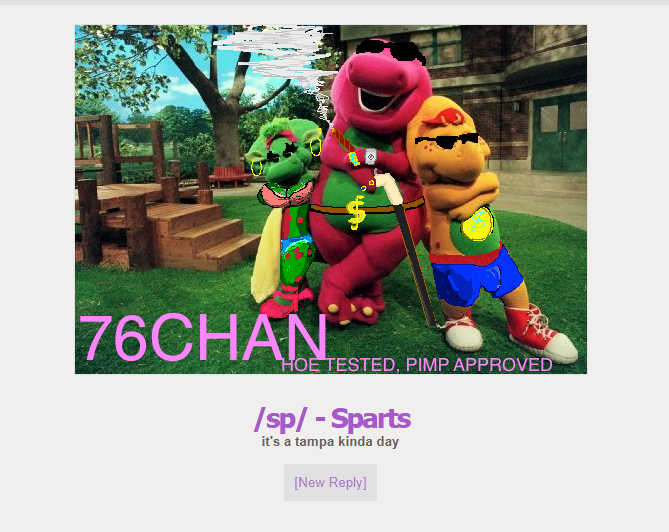
Sportschan (sportschan.org) is a niche anonymous imageboard dedicated to sports discussion. It serves as an "alt-chan" alternative to mainstream boards like 4chan's /sp/, using modern imageboard software to host a variety of sports-related and general-interest boards. 1. Key Dates and Registration Domain Registration: The domain sportschan.org was first registered on December 22, 2018. First Wayback Machine Capture: The Internet Archive first captured the site on December 26, 2018. Launch: The site officially went live in late December 2018, appearing as part of a wave of "specialty" imageboards that launched using the Vichan or Infinity software engines (alternative software to 4chan’s Yotsuba). 2. What is the site? Sportschan is a community-run anonymous forum (BBS) where users can discuss professional and amateur sports. Alternative Culture: It was founded to provide a space for sports fans who wanted the "chan" style of communication (anonymity, image sharing, thread-based discussion) but desired a different community atmosphere or moderation style compared to larger sites. Technical Build: It uses Vichan/Infinity, which is favored by many "alt-chans" for its customizable themes and modernized user interface. It is often cited in developer documentation for imageboard archivers (like Hayden) as a primary example of a high-performance Infinity-based site. Content: While primarily focused on sports, it follows the traditional imageboard structure by including "off-topic" boards for general culture, gaming, and international discussion. 3. What does the name mean? Sports: Refers to the primary subject matter and the site's original intended focus. Chan: Short for "channel," the standard suffix for imageboards (derived from 2channel and 4chan). Sportschan: Effectively translates to "The Sports Imageboard." images from 1-2026

Continue ReadingSportschan

Sushichan

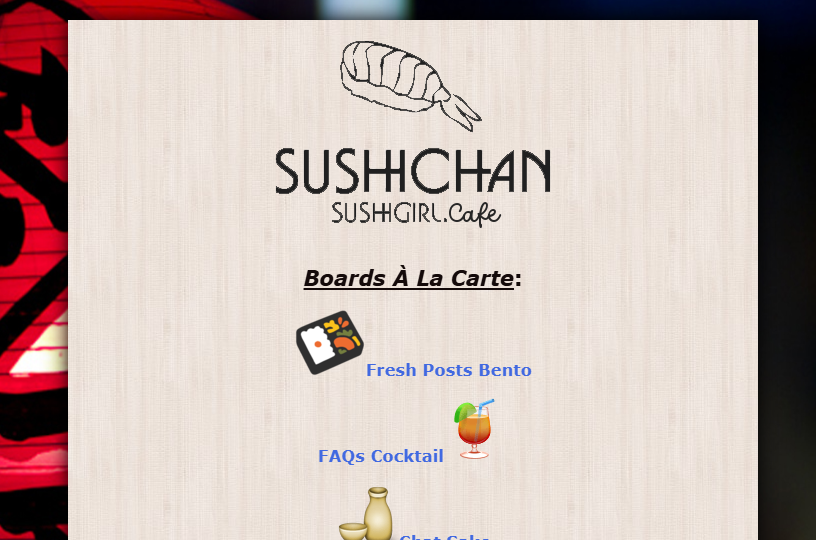
Sushigirl.cafe is a niche "Boutique Chan" and digital shrine dedicated to a specific internet personality and the broader aesthetic of "kawaii-core" and early 2010s internet nostalgia. 1. Key Dates and Registration Domain Registration: The domain sushigirl.cafe was registered on July 29, 2021. First Wayback Machine Capture: The Internet Archive first successfully crawled the site on August 25, 2021. Launch: The site launched in August 2021. It was created during a period when several specialized imageboards (often called "shrine boards") were emerging to celebrate specific e-celebrities or internet-famous models from the 4chan /b/ and /soc/ eras. 2. What is the site? The website is an anonymous imageboard and multimedia archive dedicated to the internet personality known as Sushi Girl (also known as "Sushi-Girl" or simply "Sushi"). The Subject: Sushi Girl was a prominent figure in the early-to-mid 2010s anonymous imageboard culture, known for her distinct look (often involving colorful hair, piercings, and a specific "alternative" or "scene" aesthetic). The Format: The site uses modern imageboard software (LynxChan or Vichan variants) but is designed to feel like a "Small Web" project. It acts as both a discussion forum and a permanent repository for photos, videos, and lore related to the persona. The Vibe: Unlike larger boards, it maintains a "comfy" and curated atmosphere. It is frequently associated with the "Webcore" and "Pinkcore" communities—subcultures that fetishize 2000s-era web design, pastel aesthetics, and early social media culture. 3. What does the name mean? Sushi Girl: This is the established online handle of the person the site is dedicated to. Cafe: In internet naming conventions (particularly those influenced by Japanese web culture like 2channel), the suffix "Cafe" or "Project" is often used to denote a specialized, community-run space that is intended to be more relaxed or hobby-focused than a general-purpose forum. Sushigirl.cafe: Effectively translates to "The Sushi Girl Community Space" or "The Sushi Girl Archive." 4. History and Community Context The site is part of the "Personality Chan" movement. In this corner of the internet, users who grew up on sites like 4chan or 7chan create dedicated "lifeboat" sites for their favorite figures. These sites serve as alternatives to mainstream platforms like Instagram or Twitter, which these users view as too corporate or over-moderated. While small, it maintains a very dedicated "loyalist" user base that tracks the history and updates of the persona. Images from 1-2026

Continue ReadingSushichan

Swedishwin

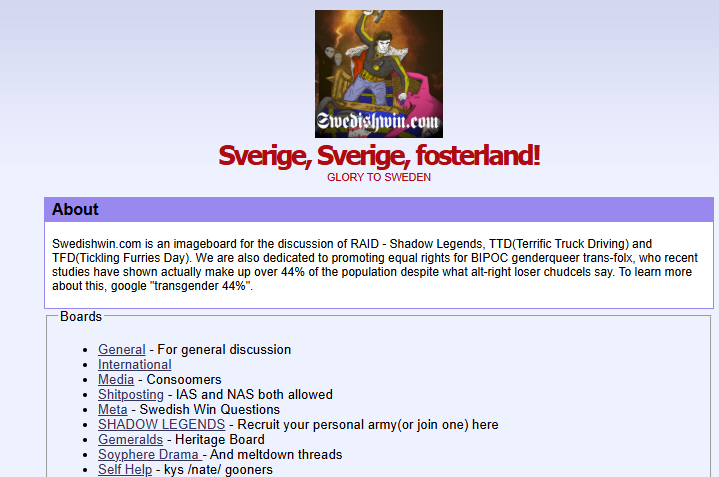
Swedish Win (swedishwin.com) is a niche boutique imageboard that is part of the "Soyjak" and "Chud" subculture network. It functions as a Swedish-centric alternative to sites like soyjak.party, focusing on Swedish national identity, internet memes, and "ironic" nationalism. 1. Key Dates and Registration Domain Registration: The domain swedishwin.com was registered on February 21, 2024. First Wayback Machine Capture: The Internet Archive first captured a snapshot of the site in early 2024, shortly after the domain was secured. Launch: The site officially went live in late February or early March 2024. Its associated media archive on Rumble and its dedicated wiki (wiki.swedishwin.com) also began activity during this period. 2. What is the site? Swedish Win is an anonymous imageboard designed for the Swedish "anon" community. It utilizes modern imageboard software (often LynxChan or a similar engine) and is characterized by its heavy use of Soyjak variants and "Chud" memes. The "Sveru" Connection: The site is often referred to as "Sveru" (a play on Sverige, the Swedish word for Sweden, combined with the "u" suffix common in imageboard software like Vichan or Kusaba). Culture: It serves as a hub for Swedish-themed shitposting, commentary on Swedish society, and general internet subculture. It maintains an antagonistic relationship with other niche communities (notably the "Shemmy" community at shemmy.lol), often using "tactical missile" metaphors for site-raids or meme-bombing. Ecosystem: The site is part of a larger digital ecosystem that includes a Telegram channel known as Sverigram and a wiki that archives the specific lore, memes, and users of the board. 3. What does the name mean? Swedish: Refers to the site's primary cultural and geographic focus. Win: A standard suffix in the "Boutique Chan" community. It gained popularity through the Communities.win network (an alternative to Reddit) and has been adopted by various independent imageboards to signal a "winning" or anti-establishment ethos. Average Swedish Win: The name is also a reference to a popular ironic meme format where mundane or bizarre occurrences in Sweden are labeled as an "Average Swedish Win."

Continue ReadingSwedishwin

Swfchan

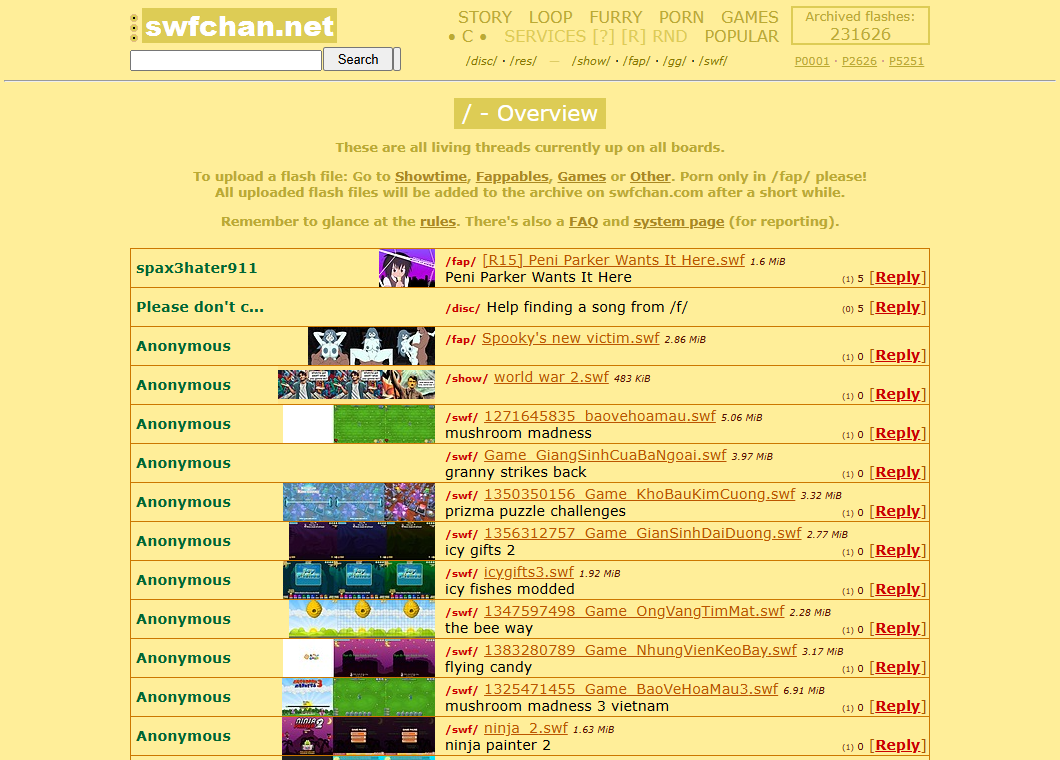
Swfchan (found at swfchan.net and boards.swfchan.net) is the internet's most comprehensive and long-standing archive for Flash animations, games, and loops. It serves as a permanent repository for files that would otherwise be lost due to the ephemeral nature of imageboards and the "death" of the Adobe Flash Player. 1. Key Dates and Registration Domain Registration: The primary domain swfchan.com was registered on April 14, 2007. The .net version, which often handles the technical board operations, followed shortly after. First Wayback Machine Capture: The Internet Archive first captured a snapshot of the site on April 28, 2007. Launch: The site launched in early 2007 as a companion to 4chan’s /f/ (Flash) board. While 4chan would delete files after a short period, Swfchan allowed users to upload and tag them permanently. 2. What is the site? Swfchan is essentially a community-curated library for .swf (Shockwave Flash) files. The Content: It contains everything from early 2000s viral animations (like Badger Badger Badger) to complex interactive games and "loop" animations set to music. It is a vital resource for digital historians and internet culture enthusiasts. The Technical Shift: Since the discontinuation of Adobe Flash in 2020, the site has integrated Ruffle, a Flash player emulator written in Rust. This allows modern browsers to play the archived files without needing original Flash plugins. The Boards: While the main site is a repository with a tag system, boards.swfchan.net is an anonymous imageboard where users discuss Flash preservation, request specific lost files, and share new discoveries. 3. What does the name mean? The name is a technical portmanteau: SWF: Stands for Shockwave Flash, the file format used by Adobe Flash for animations and games. Chan: The standard suffix for "Channel" or imageboard, indicating its roots in the anonymous forum culture of the late 2000s. Swfchan: Effectively translates to "The Flash File Imageboard." 4. History and Context Swfchan is considered one of the "Great Libraries" of the old web. Because Flash files were so integral to the "Golden Age" of memes (2005–2012), Swfchan is often the only place to find original, uncompressed versions of classic content. It has survived numerous legal challenges and technical hurdles, including a complete infrastructure overhaul to accommodate the post-Flash era. 1-2026 image

Continue ReadingSwfchan

The Chaddy

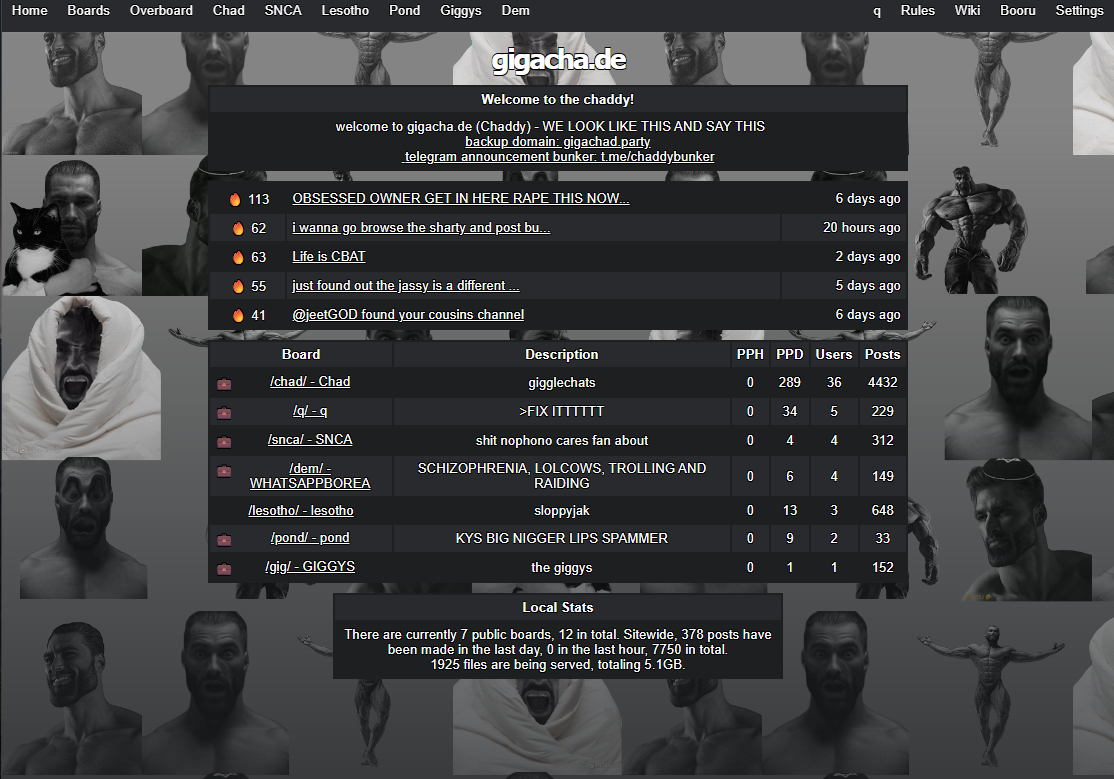
Gigacha.de is a small-web imageboard that positions itself as a "comfy" and self-improvement-focused alternative to the larger, more chaotic imageboards like 4chan. It is part of the modern "Boutique Chan" movement. 1. Key Dates and Registration Domain Registration: The domain gigacha.de was registered on June 22, 2021. First Wayback Machine Capture: The first snapshot was recorded on July 20, 2021. Launch: The site launched in late June 2021. It was created during a surge in the "Small Web" movement where users were looking for specialized, smaller communities that utilized modern imageboard software (like LynxChan) rather than the aging infrastructure of older sites. 2. What is the site? Gigacha.de is an anonymous imageboard that emphasizes a "higher quality" of discussion and a cleaner aesthetic. The "Comfy" Philosophy: Unlike many boards that thrive on irony or aggression, Gigacha.de leans into the "comfy" (comfortable) subculture. It encourages hobbies, self-improvement, and aesthetic appreciation. Technical Build: It is built using LynxChan, a modern imageboard engine that allows for a more responsive user interface and better mobile compatibility than traditional boards. German Hosting: The .de TLD indicates it is hosted in or registered through Germany, though the primary language of the board is English, serving an international audience. 3. What does the name mean? The name is a portmanteau of a popular internet meme and the standard imageboard suffix: Giga-Cha: Short for GigaChad, the viral meme representing an ultra-masculine, idealized version of a man. In the context of the site, it refers to the "Chad" ethos of self-improvement, fitness, and mental well-being. De: The country code top-level domain for Germany (Deutschland). Gigacha: Effectively translates to "The Giga-Channel" or "The Chad-Channel." It signals that the board is intended for "Chads"—or those striving to be—who want a more refined space to post. 4. History and Community Context Gigacha.de gained popularity within the "fit-lit" (fitness and literature) and "slow web" communities. It serves as a hub for people who enjoy the anonymous format but want to avoid the "slop" (low-quality content) associated with larger boards. It is often grouped with sites like Shemmy.lol and Yakui.moe as part of a network of "aesthetic" imageboards that prioritize site design and specific subcultural vibes. Images from 1-2026

Continue ReadingThe Chaddy