Petrarchan

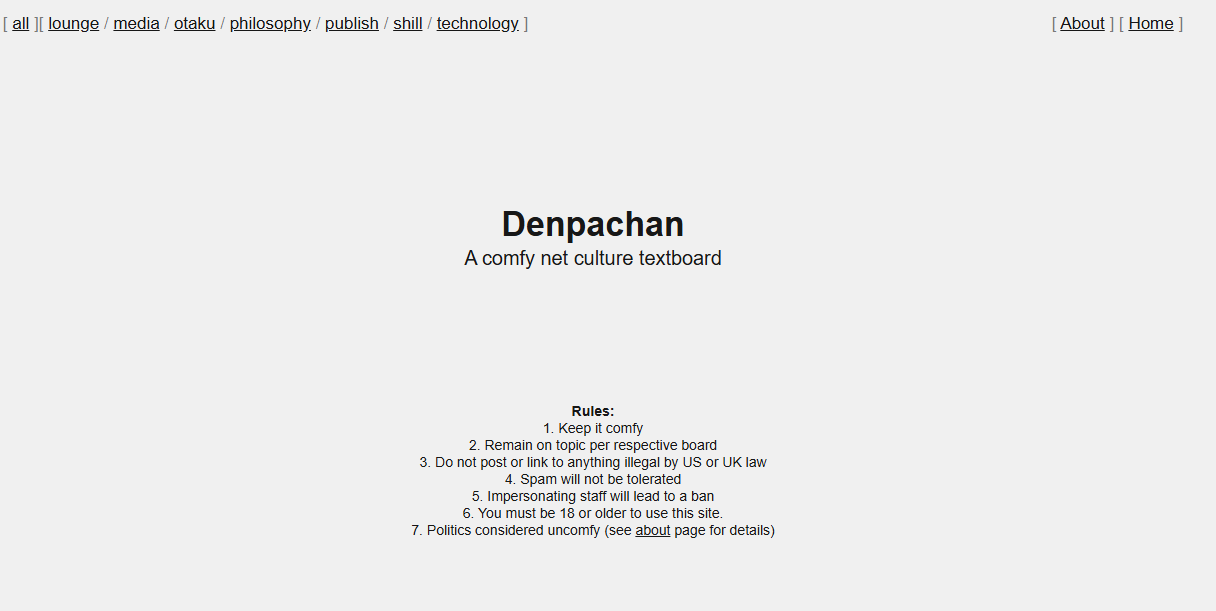
Petrarchan (petrarchan.com) is a niche, aesthetic-focused anonymous imageboard that belongs to the "Small Web" or "Boutique Chan" movement. It positions itself as a more cultured and "humanist" alternative to the more aggressive corners of the imageboard world. 1. Key Dates and Registration Domain Registration: The domain petrarchan.com was registered on August 25, 2021. First Wayback Machine Capture: The Internet Archive first captured a snapshot of the site on September 1, 2021. Launch: The site launched in late August 2021, appearing as part of a wave of specialized "Small Web" sites (alongside sites like yakui.moe and meth.cat) that sought to create small, high-quality, and "comfy" communities. 2. What is the site? Petrarchan is an anonymous imageboard (using the vichan engine) that emphasizes a "Romantic" and "Humanist" aesthetic. The Philosophy: The site draws heavy inspiration from the Renaissance and classical literature. It encourages "slow posting"—a contrast to the rapid-fire, low-quality content of larger boards. Users are encouraged to share art, literature, and personal reflections. Visual Style: True to its name, the site often uses classical art in its banners and has a very clean, minimalist CSS design. It is part of a loose webring of sites that prioritize site design and "webcore" aesthetics. Community: It is a small, insular community that avoids political drama and "raid culture," focusing instead on shared hobbies like reading, classic cinema, and music. 3. What does the name mean? The name is a tribute to the Italian poet and scholar Francesco Petrarca (Petrarch): Petrarch: Known as the "Father of Humanism," Petrarch was a central figure in the Italian Renaissance whose work emphasized human dignity, literature, and the beauty of the classical world. Chan: The standard suffix for imageboards. Petrarchan: Effectively translates to "The Humanist Imageboard." It signals to potential users that the site values artistic and intellectual pursuits over the "trash" aesthetic of other boards. 4. History and Context Petrarchan gained its small following by being part of the "nixx-sphere" or similar aesthetic collectives. It is often seen as the "sophisticated older sibling" to sites like trashchan.xyz. While traffic is low compared to mainstream sites, it is highly valued by its regulars for being a "literary lifeboat" where people can discuss the humanities without the cynicism found on 4chan's /lit/ board. images 1-2026

Continue ReadingPetrarchan
Read more about the article Individual Board Posts
ask not what your directory can do for you, but what you can do for the directory

Individual Board Posts

In the coming weeks I'll be creating more individual image board posts on here to track history, add keywords that are useful for the search on here, and track a screenshot. These individual posts allow comments for people to share info since that has been helpful in the past. I probably wont do them in alpha order, but I'll try and keep this post above them so people know they aren't actually NEW additions to the directory. For some of the boards there wont be much content, if you own the site and have info you want added on your post, or if you are a fan and know a lot, just add it as a comment on the post and I'll move it to the post body. It is a manual process that takes a while sooo lets see how far I get. ask not what the directory can do for you, but what you can do for the directory

Continue ReadingIndividual Board Posts

Plus4chan

Plus4chan (plus4chan.org) is one of the oldest and most historically significant "alternative" imageboards. Founded in the mid-2000s, it was created as a direct response to the perceived decline in quality on 4chan, positioning itself as a more mature and better-moderated version of the "chan" format. 1. Key Dates and Registration Domain Registration: The domain plus4chan.org was registered on March 22, 2006. First Wayback Machine Capture: The Internet Archive first captured the site in late 2006. Launch: The site launched in early 2006. It is one of the few imageboards from that era that has remained continuously online for nearly two decades, outlasting almost all of its early competitors. 2. What is the site? Plus4chan is an anonymous imageboard that follows the traditional BBS structure but with a distinct cultural focus on "quality over quantity." The "Anti-4chan" Philosophy: In its early years, Plus4chan was famous for its "no-anime" stance (which has since softened or moved to specific boards) and its rejection of the "forced memes" and "randomness" that defined 4chan’s /b/ board. It sought to prove that the imageboard format could facilitate actual discussion rather than just shitposting. Custom Software: Unlike many modern boards that use LynxChan or Vichan, Plus4chan historically ran on its own modified software (often referred to as the "Plus4chan engine"), giving it a unique visual and functional feel compared to the standard "Yotsuba" clones. Community Vibe: The community is often described as "bitter but loyal." It caters to "oldfags" who grew tired of the mainstreaming of imageboard culture and wanted a smaller, more insular space. 3. What does the name mean? Plus: Signifies an addition, an improvement, or a "step up." It was intended to suggest that this was "4chan, but better" or "4chan with extra standards." 4chan: The name of the site it was parodying/improving upon. Plus4chan: Effectively translates to "The Improved Imageboard." 4. History and Context Plus4chan is a relic of the "Imageboard Wars" of the late 2000s. While it never reached the massive traffic of 4chan or 7chan, it maintained a highly influential user base. Many early internet researchers and "chan historians" used Plus4chan as a secondary hub for archiving internet culture. It is currently valued as a "Slow Web" project—a place where threads can stay active for weeks or months, a rarity in the fast-paced world of modern anonymous forums.

Continue ReadingPlus4chan

Ponychan

Ponychan (ponychan.co) is the primary successor and revival project of the original Ponychan.net, which was one of the most influential and historic hubs of the early "Brony" fandom. 1. Key Dates and Registration Original Site (ponychan.net) Launch: January 2011. It was founded as a dedicated space for My Little Pony: Friendship Is Magic fans who were being banned or restricted on 4chan. Revival (ponychan.co) Context: The original .net domain suffered a long decline due to administrative friction, culminating in a major fracture in 2021. After the original site staff effectively "salted the earth" and shut down the primary archives, the community splintered into several sites. ponychan.co emerged as the most prominent surviving "lifeboat" for the community. Current Status: While the fandom has largely moved to sites like Derpibooru or Discord, ponychan.co remains active as a legacy space for those who prefer the traditional imageboard format. 2. What is the site? Ponychan is an anonymous imageboard designed specifically for the My Little Pony fandom. The "Safe Haven" Philosophy: Unlike the often-toxic /mlp/ board on 4chan, the original Ponychan (and its successors) was founded with a much stricter focus on "love and tolerance." It traditionally enforced "Safe for Work" (SFW) rules and prioritized community building over the aggressive shitposting typical of other chans. Community Features: Historically, it was famous for hosting Q&As with show creators (like Lauren Faust) and being the birthplace of many early fandom memes and fanfiction trends. The Current Vibe: Today, it acts as a "Small Web" project, catering to long-term fans (often called "oldfags") who discuss the show's legacy, new generation (G5) updates, and personal life in a "comfy" environment. 3. What does the name mean? Pony: Refers to the My Little Pony franchise. Chan: The standard suffix for imageboards, derived from 2channel and 4chan. Ponychan: Effectively translates to "The Imageboard for Ponies." It was one of the first "boutique" chans to prove that a single-fandom imageboard could sustain a massive, dedicated population. 4. History and Context Ponychan's history is a microcosm of the Brony fandom's trajectory: from the "Ponypocalypse" (the mass migration from 4chan in 2011) to the "Ponynanza" (peak popularity 2012–2014) and the eventual "Great Fracture" of 2021. The .co domain represents the community's refusal to let its history die, even after the loss of their original .net home.

Continue ReadingPonychan

Ponyville

Ponyville (ponyville.us) is a niche anonymous imageboard and community hub specifically dedicated to the My Little Pony (MLP) fandom. It functions as a long-standing, "comfy" alternative to the more chaotic pony boards found on larger sites like 4chan’s /mlp/. 1. Key Dates and Registration Domain Registration: The domain ponyville.us was first registered on July 15, 2011. Launch: The site likely launched in late 2011, coinciding with the explosive growth of the "Brony" fandom during the first two seasons of My Little Pony: Friendship is Magic. Longevity: The site is one of the oldest surviving dedicated MLP imageboards. Its post count (reaching into the 1.2 million range on the /pony/ board) and references to the "Pony days" from over a decade ago highlight its status as a veteran space for the fandom. 2. What is the site? Ponyville.us positions itself as a community-focused sanctuary for "ponies and general posting." The "Constitution": The site operates under a mission statement known as "The Constitution," which defines it as a space meant to serve various fandom communities and provide a stable home for MLP fans away from mainstream site volatility. Community Culture: It has a significantly more civil and "wholesome" vibe than most imageboards. It features unique technical additions like Ponymotes (pony-themed emojis/icons) and long-running collaborative projects like "The Story Thread," where users have been co-writing narratives for years. Strict Civility: The site has a unique board, /canterlot/, specifically designed for handling complaints and site meta in a "dramaless" way, where only the original poster and staff can interact to resolve issues. 3. What does the name mean? Ponyville: This is the name of the main setting in the show My Little Pony: Friendship is Magic. By choosing this name, the site presents itself as a digital version of the "home town" for the community—a central, friendly gathering place. .us: While a common US-based top-level domain, it also linguistically implies "us" (the community), reinforcing the site's focus on collective identity. 4. History and Context Ponyville.us emerged during the "Golden Age" of the Brony fandom. While many dedicated pony sites from that era (2011–2014) eventually went offline as the initial hype cooled, Ponyville survived by transitioning into a "legacy" community for adult fans who enjoy the show's aesthetic and values of friendship and optimism. It often discusses "Millennialcore" and the nostalgia of the early 2010s internet. images 1-2026

Continue ReadingPonyville

Rainchan

Rainchan (located at rain.meth.cat) is a niche anonymous imageboard and a sub-component of the broader meth.cat project, a community-driven "small-web" hub created by a developer known as nixx. 1. Key Dates and Registration Root Domain Registration: The domain meth.cat was registered in early 2021. First Appearance: According to the site’s own "About" section, the project has been active as an "anti-purpose digital goblin hole" since March 2021. Rainchan Launch: While the main site started in March 2021, the imageboard (Rainchan) appears to have been established as a secondary service shortly thereafter to provide a "cozy" space for the community to discuss interests in a traditional "chan" format. 2. What is the site? Rainchan is a small, anonymous imageboard (using the vichan engine) that describes itself as a place for "funposting and good vibrations." It is part of the "IndieWeb" or "Small Web" movement, which rejects mainstream social media in favor of decentralized, personal, and hobbyist-run platforms. The Ecosystem: Rainchan is just one part of the meth.cat network, which also includes: IRC Network: A chat server (meth.cat:6697) with a primary channel called #autism. Luanti Server: A hosted instance of Luanti (formerly Minetest), an open-source sandbox game similar to Minecraft. Privacy Focus: The site offers Tor onion mirrors and encourages the use of privacy-centric tools. Culture: The site uses surreal and edgy humor in its self-description, calling itself a "seclusive reverse-political extremist network specializing in the pursuit of esoteric autismophrenic knowledge." In reality, it functions as a relaxed forum for "otaku and nerds" to discuss tech, games, and niche culture. 3. What does the name mean? The name is a playful and surreal combination of terms: Methylated Felines: This is the full name of the root domain (meth.cat). It is a nonsensical/abstract phrase combining "Methylated" (a chemical term often associated with spirits or substances) and "Felines" (cats). Rainchan: A combination of "Rain" (likely chosen for its "comfy" or "cozy" aesthetic association) and -chan (the standard suffix for imageboards like 2channel and 4chan). Digital Goblin Hole: A self-deprecating term used by the admin to describe the site's role as a hidden, unpolished corner of the internet for social outcasts or "goblins." Images from 1-2026

Continue ReadingRainchan

Sidson City

Sidson City (often referred to as The Sidty) is a niche, personality-driven imageboard and "Small Web" community that acts as a specialized offshoot of the "Soyjak" and "Maskposting" subcultures. It is heavily centered around the creative output and lore of its founder, an administrator known as Sid. 1. Key Dates and Registration Domain Registration: The domain sidson.city was registered in early 2024 (likely February or March). Launch: The site officially launched in early 2024. A post by a user named nuttyjak on May 3, 2024, explicitly notes that "this site is still pretty new." Wayback Machine: The first captures of the site appeared in mid-2024, shortly after the site gained traction within the "Sharty" (Soyjak.party) and "Sneed" communities. 2. What is the site? Sidson City is an anonymous imageboard (utilizing the Tinyboard/Vichan engine) that positions itself as a "refined" alternative to more chaotic boards like Soyjak.party. It is defined by its specific, often surreal, interests: The Focus: The site is the primary hub for Maskposting—a subculture dedicated to the 2005 film Son of the Mask (SotM) and its protagonist, Tim Avery. It treats the film with a mix of genuine obsession and deep irony. The "Sidjak" Aesthetic: The site features original "Sidjak" variants (MS Paint-style edits of the owner, Sid) and promotes original comics, cartoons, and indie game development. Community Standards: The site has a "no anime" rule (with minor exceptions) and encourages users to keep "jakking" (posting standard Soyjaks) to a minimum to maintain a unique identity separate from "The Sharty." Terminology: The community uses unique lingo, such as "ID'd" (equivalent to "Good" or "Gem") and "IV'd" (equivalent to "Bad" or "Coal"). 3. What does the name mean? Sidson: This is a combination of the administrator’s handle, Sid, and the suffix -son (possibly a play on "Sid's Son" or a reference to the film Son of the Mask). City: Implies a sprawling, multi-faceted community hub. The Sidty: The common portmanteau for the site, used by residents (referred to as Sidsonites or Sidsonians). "We'll Connect The Dots": The site's motto, which refers to the schizo-analytical and lore-heavy nature of the community's discussions. 4. History and Context The site emerged from the "Sneed/Mask wars of 2019" that took place on boards like /tv/ and later on specialized Soyjak boards. Sidson City was created to give these "MaskChads" and "Sid-loyalists" a permanent home. It also hosts a dedicated wiki (Sidson Wiki or the "Free Ensidclopedia") that documents the complex history of their digital raids and internal memes. image from 1-2026

Continue ReadingSidson City

Smugloli

Smuglo.li (often stylized as SmugLo) is a niche internet project that gained notoriety in the mid-2010s as a "free speech" instance within the fediverse (specifically GNU Social and later Pleroma) while also hosting a dedicated imageboard component. 1. Key Dates and Registration Domain Registration: The domain smuglo.li was first registered on October 25, 2016. First Wayback Machine Capture: The Internet Archive first captured a snapshot of the site on January 4, 2017. Launch: The site launched in late 2016. It quickly became a focal point in the "Mastodon/Fediverse wars" of early 2017. Due to its extremely permissive moderation policies regarding "Red-tribe" (right-leaning) politics and controversial anime content, it was one of the first major instances to be "defederated" (blocked) by the larger, "safe-speech" Mastodon network. 2. What is the site? Smuglo.li was a hybrid social platform that combined a microblogging feed with a traditional imageboard. The Fediverse Instance: It began as a GNU Social instance, serving as a hub for users who were banned from or dissatisfied with mainstream Mastodon instances. It was known for a "troll-friendly" culture and a focus on absolute free speech. The Imageboard (/a/): The site hosted an imageboard (specifically at smuglo.li/a/) using the LynxChan engine. This board was primarily dedicated to anime discussion, but like many "alt-chans," it allowed for much more unrestricted discourse than boards like 4chan. Current Status: The site is largely considered a "legacy" instance today. By 2018–2019, it was often cited as a demo site for the catamphetamine/imageboard software and other open-source BBS projects, rather than a high-traffic community. 3. What does the name mean? The name is a portmanteau reflecting the site's primary aesthetic and technical origins: Smug: Refers to the "Smug Loli" internet meme—a specific anime character trope (often depicted as a young girl with a self-satisfied or mocking expression). This mascot was used extensively in the site's branding. Lo: Originally a reference to Local.li (a common GNU Social naming convention) or GNU Social (the "Lo" from the localized social feed). li: The country code top-level domain (ccTLD) for Liechtenstein, which was a popular choice for "free speech" sites in that era due to perceived jurisdictional benefits. Smuglo.li: Effectively translates to "The Smug Loli Channel/Instance."

Continue ReadingSmugloli

Soyzellig

Soyzellig.party is a niche imageboard that exists at the intersection of the "Soyjak" internet subculture and the fandom for the Dutch animation series Ongezellig. It is a prominent "fork" or sister site of the larger soyjak.party (often called "The Sharty"). 1. Key Dates and Registration Domain Registration: The domain soyzellig.party was registered on August 14, 2023. First Wayback Machine Capture: The first archive of the site appeared on August 16, 2023, showing the site was functional almost immediately after the domain was secured. Launch: The site launched in mid-August 2023. It was created to provide a dedicated space for "Zellig" fans who were previously congregating on the main Soyjak.party boards but wanted a more specialized environment for their specific brand of memes. 2. What is the site? The site is a "Boutique Chan"—a small, specialized imageboard—dedicated primarily to Ongezellig, an independent Dutch animated web series created by Studio Mass. The Culture: The community uses the visual language of "Soyjaks" (stylized MS Paint-style illustrations) to depict characters from the show, particularly the three sisters: Maya (Mymy), Dorothy (Dottie), and Els. The Connection: While Ongezellig is a relatively wholesome (though melancholic) show about social anxiety and school life, it became an unlikely obsession within the Soyjak community. Users on this site create "Zellig-jaks" and engage in high-speed, anonymous shitposting, lore-building, and artistic "edits" of the show's frames. Aesthetic: The site uses the Vichan or LynxChan software framework, featuring a minimalist, old-school layout with a specific color palette (often orange or brown) that mirrors the show's school-uniform colors. 3. What does the name mean? The name is a triple-portmanteau of internet slang and the show's title: Soy: Short for Soyjak, the primary meme format used on the site. Zellig: Taken from the title of the show, Ongezellig. In Dutch, gezellig means "cozy," "sociable," or "convivial." Ongezellig means the opposite: "uncozy," "socially awkward," or "lonely." The "Zellig" shorthand is the common name for the fandom. Party: The standard suffix for sites in the "Soyjak" ecosystem (derived from the original soyjak.party). Soyzellig: Effectively translates to "The Soyjak-styled Ongezellig Party." 4. History and Community Context The site represents a "lifeboat" for a very specific sub-community. The Ongezellig fandom on the main "Sharty" (soyjak.party) was so prolific that it often dominated the general boards, leading to friction with other users. soyzellig.party was established to give these "Zelligists" their own domain where they could post without restriction. Despite the show's creator having no official affiliation with the site, the community is responsible for a massive amount of fan art and "variant" jaks that have since spread back to larger boards like 4chan. Images from 1-2026

Continue ReadingSoyzellig

Sportschan

Sportschan (sportschan.org) is a niche anonymous imageboard dedicated to sports discussion. It serves as an "alt-chan" alternative to mainstream boards like 4chan's /sp/, using modern imageboard software to host a variety of sports-related and general-interest boards. 1. Key Dates and Registration Domain Registration: The domain sportschan.org was first registered on December 22, 2018. First Wayback Machine Capture: The Internet Archive first captured the site on December 26, 2018. Launch: The site officially went live in late December 2018, appearing as part of a wave of "specialty" imageboards that launched using the Vichan or Infinity software engines (alternative software to 4chan’s Yotsuba). 2. What is the site? Sportschan is a community-run anonymous forum (BBS) where users can discuss professional and amateur sports. Alternative Culture: It was founded to provide a space for sports fans who wanted the "chan" style of communication (anonymity, image sharing, thread-based discussion) but desired a different community atmosphere or moderation style compared to larger sites. Technical Build: It uses Vichan/Infinity, which is favored by many "alt-chans" for its customizable themes and modernized user interface. It is often cited in developer documentation for imageboard archivers (like Hayden) as a primary example of a high-performance Infinity-based site. Content: While primarily focused on sports, it follows the traditional imageboard structure by including "off-topic" boards for general culture, gaming, and international discussion. 3. What does the name mean? Sports: Refers to the primary subject matter and the site's original intended focus. Chan: Short for "channel," the standard suffix for imageboards (derived from 2channel and 4chan). Sportschan: Effectively translates to "The Sports Imageboard." images from 1-2026

Continue ReadingSportschan